When the Museum Becomes a Playground: How Children Learn Through Role-Play and Activities

When the Museum Becomes a Playground: How Children Learn Through Role-Play and Activities
Museums are no longer quiet halls where visitors simply observe artifacts behind glass. Across the United States, they are transforming into vibrant learning spaces where children can touch, play, and explore history, science, and art through hands-on experiences. When a museum becomes a playground, it opens the door to a new kind of learning—one that blends curiosity, imagination, and play.
From Exhibition to Experience
In recent years, many American museums have shifted from presenting information on plaques to inviting children to participate actively. Instead of just reading about ancient civilizations, kids might dress up as archaeologists and dig for “artifacts,” or they might step into a recreated 19th-century general store to learn about trade and community life.
This approach is often called experiential learning—the idea that children learn best when they can experiment, move, and engage their senses. When they play their way into a story, it becomes something they live, not just something they hear about.
Role-Play as a Learning Tool
Role-play is one of the most powerful tools in modern museum education. When children take on a role—whether as a scientist, a pioneer, or a civil rights activist—they become part of a narrative that they help shape. This makes learning both fun and meaningful.
A child who pretends to be a marine biologist at an aquarium learns not only about ocean ecosystems but also about observation, teamwork, and problem-solving. By stepping into someone else’s shoes, children connect emotionally with the subject matter, which helps them remember and understand it more deeply.
Activities That Engage the Senses
Many museums now design exhibits that engage all five senses. It might be the smell of wood smoke in a recreated colonial kitchen, the sound of jazz in a cultural history exhibit, or the feel of clay in an art studio. When children can see, hear, touch, and even smell what they’re learning about, the experience becomes more vivid and memorable.
For younger visitors, this might mean building miniature bridges at a science museum or experimenting with color and texture in an art lab. Older children might take part in a mock archaeological dig or program a robot in a technology exhibit. In every case, learning becomes something they do, not just something they see.
Collaboration Between Schools and Museums
Across the country, schools are increasingly using museums as extensions of the classroom. A field trip can bring lessons to life, allowing students to experience what they’ve studied in a tangible way. Many museums now offer educational programs aligned with school curricula, designed for different grade levels and subjects.
When teachers and museum educators collaborate, they can create experiences that combine academic goals with creativity and play. A history class might take part in a “time travel” scavenger hunt, while a science group might conduct experiments inspired by historical inventions. These partnerships help bridge formal education and real-world exploration.
Learning That Lasts
Research shows that children retain knowledge better when they learn through active, emotional experiences. When they participate rather than observe, they form personal connections to what they’re learning. A museum visit, then, becomes more than just a fun outing—it becomes a lasting memory that reinforces curiosity and understanding.
These activities also nurture creativity, collaboration, and confidence. Children discover that knowledge isn’t confined to textbooks—it’s something they can build, test, and share through action and imagination.
Læs også:
A Museum for the Future
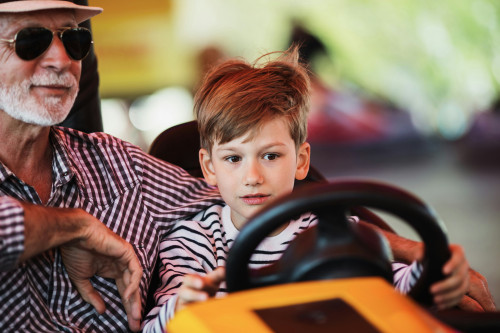
When a museum becomes a playground, it also becomes a place where families can learn together. Parents and grandparents can join in the activities, turning a visit into a shared adventure that sparks conversation long after they leave.
The museums of the future are not only guardians of the past but also spaces that connect history, science, and art to the world children live in today. By inviting kids to learn through play, museums show that curiosity is the best teacher—and that learning, at its best, feels a lot like play.
Læs også: